Planning a group tailgate at MetLife Stadium? Discover professional strategies for coordinating logistics, managing permits, and creating memorable experiences for your entire crew.
Share:
Summary:
Before you start planning your menu or sending invites, you need to understand MetLife’s specific requirements. This isn’t your backyard barbecue—it’s a highly regulated environment with rules that can make or break your event.
MetLife Stadium requires prepaid parking permits for all NFL games. You can’t just roll up and pay at the gate. These permits are color-coded based on your ticket location and must be secured in advance through official channels.
The stadium enforces a strict one-car, one-space policy. Your tailgate setup must stay within the boundaries of your parking space, with equipment positioned in front and behind your vehicle—not along the sides. This rule gets strictly enforced as game time approaches.
The parking permit system at MetLife can feel like solving a puzzle, but understanding it upfront saves massive headaches later. Gold permits get you into lots B, D, J, K, L, M, P, Deck A, and areas near American Dream. Platinum permits provide access to premium lots E, F, and G, which are closer to stadium entrances.
Here’s what many first-timers don’t realize: the numbers on your permit don’t guarantee a specific spot within that lot. Parking is first-come, first-served within your permitted area. This means arriving early isn’t just recommended—it’s essential for group coordination.
For large groups wanting to park together, you need to arrive together. MetLife doesn’t allow saving spaces, so your entire crew needs to coordinate their arrival time. The lots open five hours before kickoff, giving you plenty of time to secure adjacent spots if you plan accordingly.
The permit prices vary significantly based on the game and lot type. Gold permits can range from $17 to over $100 depending on the matchup, while Platinum permits start around $71. Factor these costs into your group budget early in the planning process.
Group tailgating requires more equipment than most people anticipate, and forgetting something critical when you’re stuck in a stadium parking lot is a nightmare scenario. Your equipment list should include commercial-grade tents (10×10 feet maximum), folding tables, chairs for everyone, coolers with plenty of ice, grills with fuel, and all necessary cooking utensils.
Weather protection is non-negotiable. MetLife Stadium sits in an exposed area where conditions can change rapidly. Heavy-duty canopies with waterproof tops and removable sidewalls give you flexibility for wind, rain, or intense sun. Don’t skimp on tent quality—cheap canopies collapse in stadium parking lot winds.
The setup process needs to happen fast and efficiently. Designate specific people for specific tasks: tent assembly, grill setup, food prep area organization, and cooler positioning. Having a clear plan prevents that chaotic scramble where everyone’s trying to help but nothing gets done efficiently.
Remember MetLife’s restrictions on grill placement. Grills must stay within your vehicle’s space and away from buildings or areas where they could damage property. The stadium provides designated hot coal disposal bins on the islands between parking lots—never dump hot coals near vehicles or in regular trash receptacles.
Want live answers?
Connect with a Savvy Tailgate expert for fast, friendly support.
Food coordination can make or break a group tailgate. With multiple people bringing different items, you need a system that ensures variety without duplication. The key is assigning specific categories rather than letting everyone bring whatever they want.
Create a shared planning document where people can claim responsibilities. Assign categories like proteins (burgers, hot dogs, chicken), sides (chips, salads, appetizers), beverages (beer, soda, water), and essentials (plates, utensils, napkins, trash bags). This approach prevents the classic scenario where everyone brings chips and nobody brings drinks.
Consider dietary restrictions and preferences early in the planning process. Having vegetarian options, gluten-free choices, and non-alcoholic beverages ensures everyone in your group feels included. Label food items clearly to help people navigate options quickly.
Communication becomes exponentially more complex as your group size increases. You need systems that keep everyone informed without creating chaos. Start with a group text or messaging app, but establish clear protocols for what information gets shared and when.
Create a detailed timeline that everyone receives in advance. Include parking lot opening time, recommended arrival time, setup responsibilities, food serving schedule, and when you’ll need to start packing up for the game. Share this timeline at least a week before the event, not the morning of.
Designate a central meeting point and backup plan. Even with the best coordination, people get separated in massive stadium parking lots. Choose an easily identifiable landmark near your target parking area and make sure everyone has the location saved in their phones.
The arrival coordination requires military-level precision. If your group is arriving in multiple vehicles and you want to park together, you need to arrive as a convoy. The lead vehicle should have the parking permit and scout the location while others wait at a predetermined staging area. Once the lead vehicle secures the area, guide the rest of the group in quickly.
Consider appointing a “logistics coordinator” for the day—someone whose job is managing the timeline, coordinating arrivals, and troubleshooting problems. This person shouldn’t be responsible for food prep or setup; their focus is keeping the entire operation running smoothly.
A successful group tailgate needs entertainment that keeps everyone engaged during the hours before kickoff. The key is choosing activities that work for varying skill levels and can accommodate your group size without requiring excessive space.
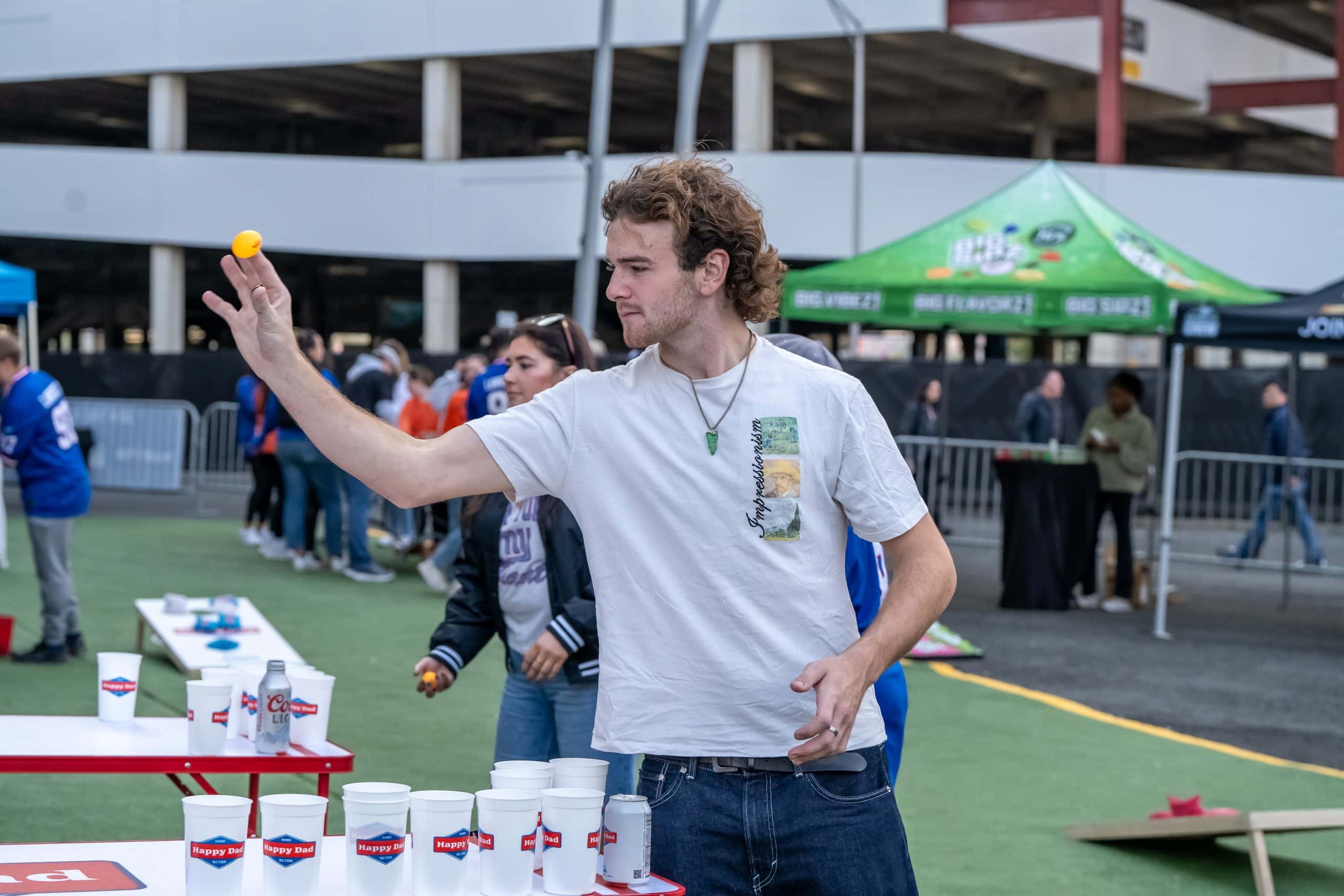
Classic tailgate games like cornhole, ladder toss, and beer pong work well because they’re easy to learn and can rotate players frequently. For larger groups, consider setting up multiple game stations or tournament-style competitions with small prizes. Giant versions of familiar games—oversized Jenga, Connect Four, or Yahtzee—create natural gathering points and conversation starters.
Music sets the atmosphere, but you need to respect MetLife’s noise restrictions. New Jersey ordinance limits speaker volume to 65 decibels maximum, so invest in quality speakers that provide clear sound at moderate volumes rather than trying to blast music across the parking lot.
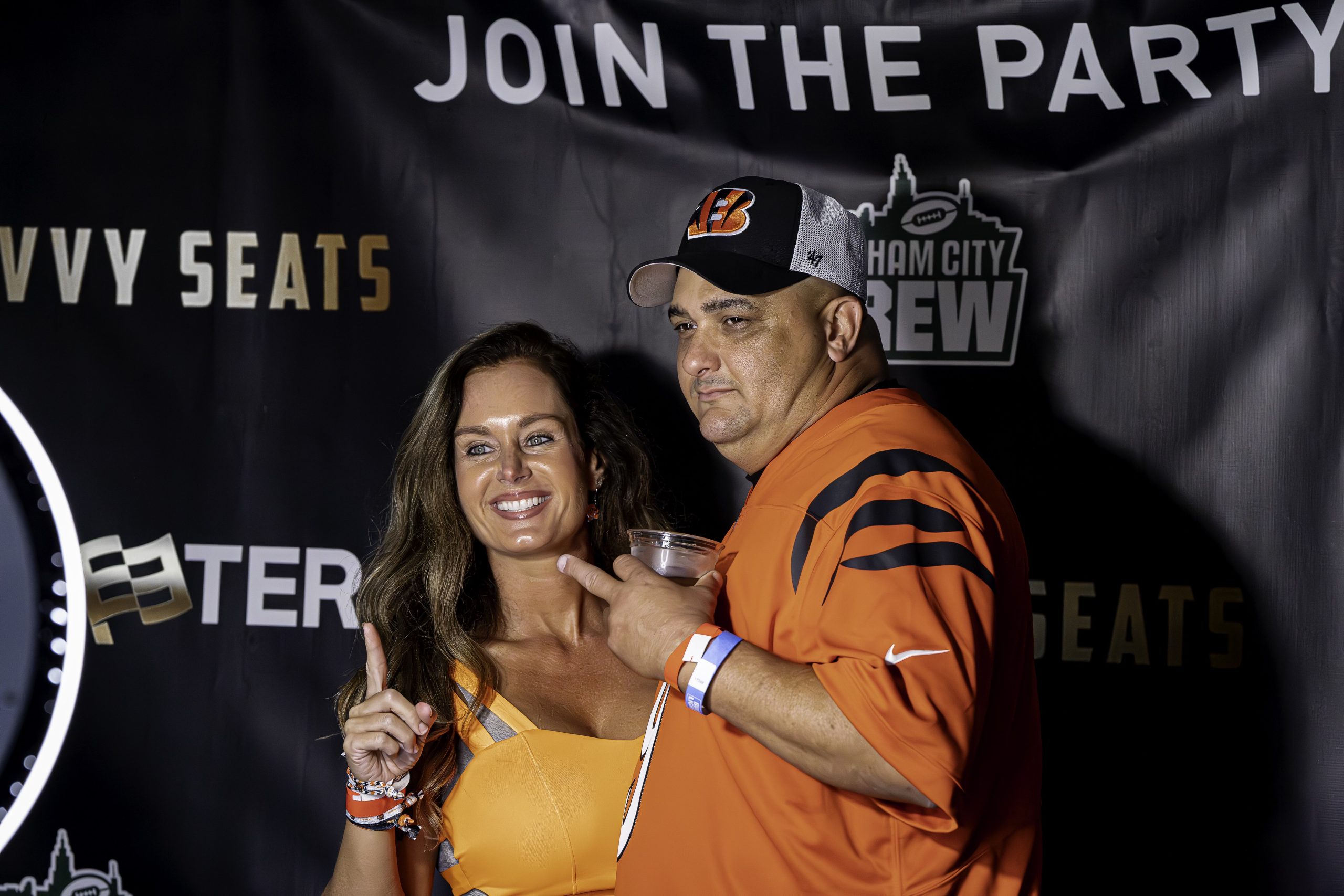
Create photo opportunities that capture the group experience. Designate someone as the unofficial photographer, or set up a simple photo station with team colors and props. These moments become the memories people talk about long after the game ends.
Consider the timing of activities carefully. High-energy games work well early in the tailgate when people are fresh and excited. As game time approaches and people start eating, shift toward more relaxed activities that allow for conversation and socializing.
The best group tailgates feel effortless to your guests, but that seamless experience requires extensive behind-the-scenes planning. Focus on creating systems that handle the logistics automatically so everyone can enjoy the celebration.
professional tailgating services have become increasingly popular at MetLife Stadium because they eliminate the complexity while delivering a premium experience. When you factor in permit costs, equipment needs, setup time, and coordination challenges, many groups find that professional services actually provide better value than doing everything themselves.
The ultimate goal is creating an experience that brings your group together and becomes a tradition worth repeating. Whether you handle everything yourself or work with professionals, the key is planning ahead, communicating clearly, and focusing on what matters most: spending quality time with your crew before cheering on your team.
For groups serious about creating unforgettable tailgating experiences at MetLife Stadium, we bring over 20 years of expertise to handle every detail while you focus on having fun.
Article details:
Share:
Continue learning: