Essential safety guidelines for Long Island tailgaters heading to MetLife Stadium, covering food safety, alcohol regulations, and fire prevention.
Share:
Summary:
Temperature control is the single most important factor in food safety. The “danger zone” between 40°F and 140°F (4°C–60°C) is where bacteria like Salmonella, E. coli, and Staphylococcus aureus thrive.
Most tailgaters focus on what tastes good but ignore what keeps people healthy. Bacteria grow most rapidly in the range of temperatures between 40 degrees F and 140 degrees F, doubling in number in as little as 20 minutes. Your carefully planned menu can become a health hazard faster than you think.
The good news? Proper food safety doesn’t require complicated procedures. It requires consistent attention to proven principles that experienced tailgaters follow religiously.
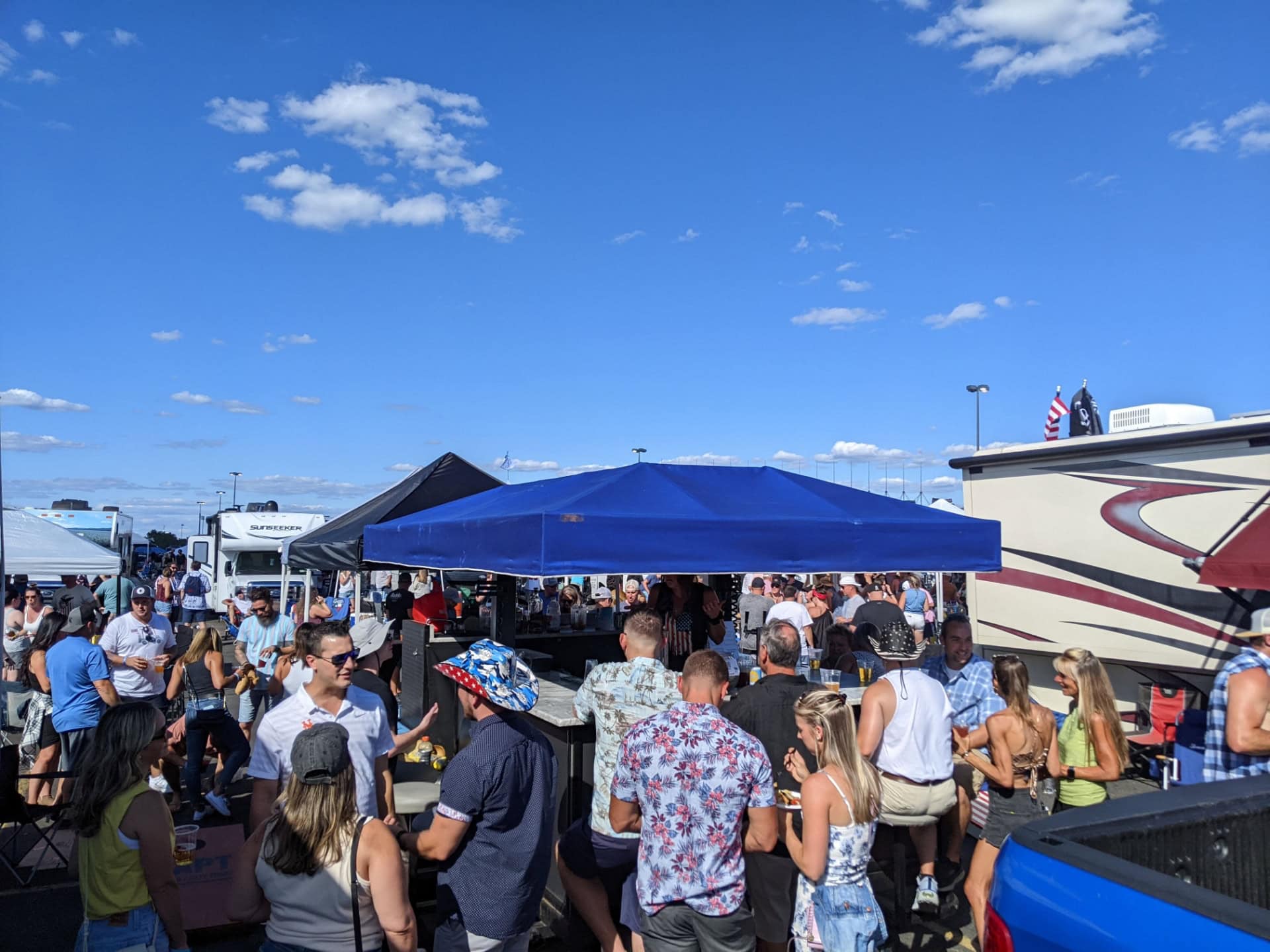
Your cooler setup determines whether your tailgate feeds people safely or sends them home sick. Keep cold food cold at or below 40 degrees F. Nestle containers of food in ice or keep them in the cooler until ready to serve. Serve small portions and change out frequently.
Here’s what separates amateur tailgaters from the pros: Use two coolers – One for drinks (which people open frequently) and one for perishable food. This prevents constant temperature fluctuations that put your food at risk.
Pack your cooler full of ice to ensure all perishable items remain at or below 41°F. Consider using block ice, which lasts longer, or ice packs. Use a thermometer in your cooler to ensure the temperature stays at or below 41°F. Block ice lasts significantly longer than cubed ice, especially during those long MetLife Stadium tailgates.
For hot foods, the rules are just as critical. Keep hot food hot at or above 140 degrees F. Place cooked food in chafing dishes, preheated steam tables, or warming trays. If you’re bringing hot food from home, eat it within 2 hours of purchase (1 hour if the temperature is above 90 °F). To keep food like soup, chili, and stew hot, use an insulated container. If you keep the insulated container closed, the food should stay hot (140 °F or above) for several hours.
The timing matters more than most people realize. Never leave food out of refrigeration over 2 hours. If the temperature is above 90 degrees F where foods are being served, the food should not be left out for more than 1 hour. This isn’t a suggestion—it’s a hard rule that prevents foodborne illness.
Grilling looks simple, but getting it right from a safety perspective requires precision that goes beyond “looks done.” Meat and poultry cooked on a grill often brown very fast on the outside, making it look done before it actually is. Cook food to a safe minimum internal temperature, as measured with a food thermometer.
Here are the non-negotiable temperature requirements: Beef, pork, veal and lamb (steaks, roasts and chops): 145 degrees F and allow for a 3-minute rest time. Hamburgers made of ground beef, pork, veal and lamb: 160 degrees F. All poultry (including ground): 165 degrees F.
Cross-contamination kills more tailgate experiences than undercooked meat. When taking food off the grill, use a clean platter. Don’t put cooked food on the same platter that held raw meat or poultry. Any harmful bacteria present in the raw meat juices could contaminate safely cooked food.
Smart preparation prevents this entirely. Keep raw meats wrapped tightly to avoid leaking onto other foods, and always place them at the bottom of the cooler. This keeps them colder and helps prevent cross-contamination. Pack multiple sets of utensils and platters specifically to avoid this issue.
The investment in a quality food thermometer pays for itself the first time it prevents a food safety incident. Pack a food thermometer to be sure the meat and poultry reach a high enough temperature to destroy any harmful bacteria that may be present. Digital instant-read thermometers work best for tailgating because they’re fast, accurate, and easy to clean between uses.
Want live answers?
Connect with a Savvy Tailgate expert for fast, friendly support.
Alcohol and tailgating go together, but the legal landscape is more complex than most Long Island fans realize when traveling to New Jersey. States and cities have laws that dictate where you can drink alcoholic beverages. Open container laws may prohibit you from possessing or consuming open alcoholic beverages in your car and from drinking alcohol on public property such as in a street, on a sidewalk or in a parking lot.
At MetLife Stadium specifically, All New Jersey alcohol consumption and distribution laws will be strictly enforced by NJ State Police and MetLife Stadium Staff. This means understanding both state law and stadium policies before you crack your first beer.
The consequences of getting this wrong extend far beyond a simple fine. Smart tailgaters plan their alcohol consumption with the same attention they give to their food menu.
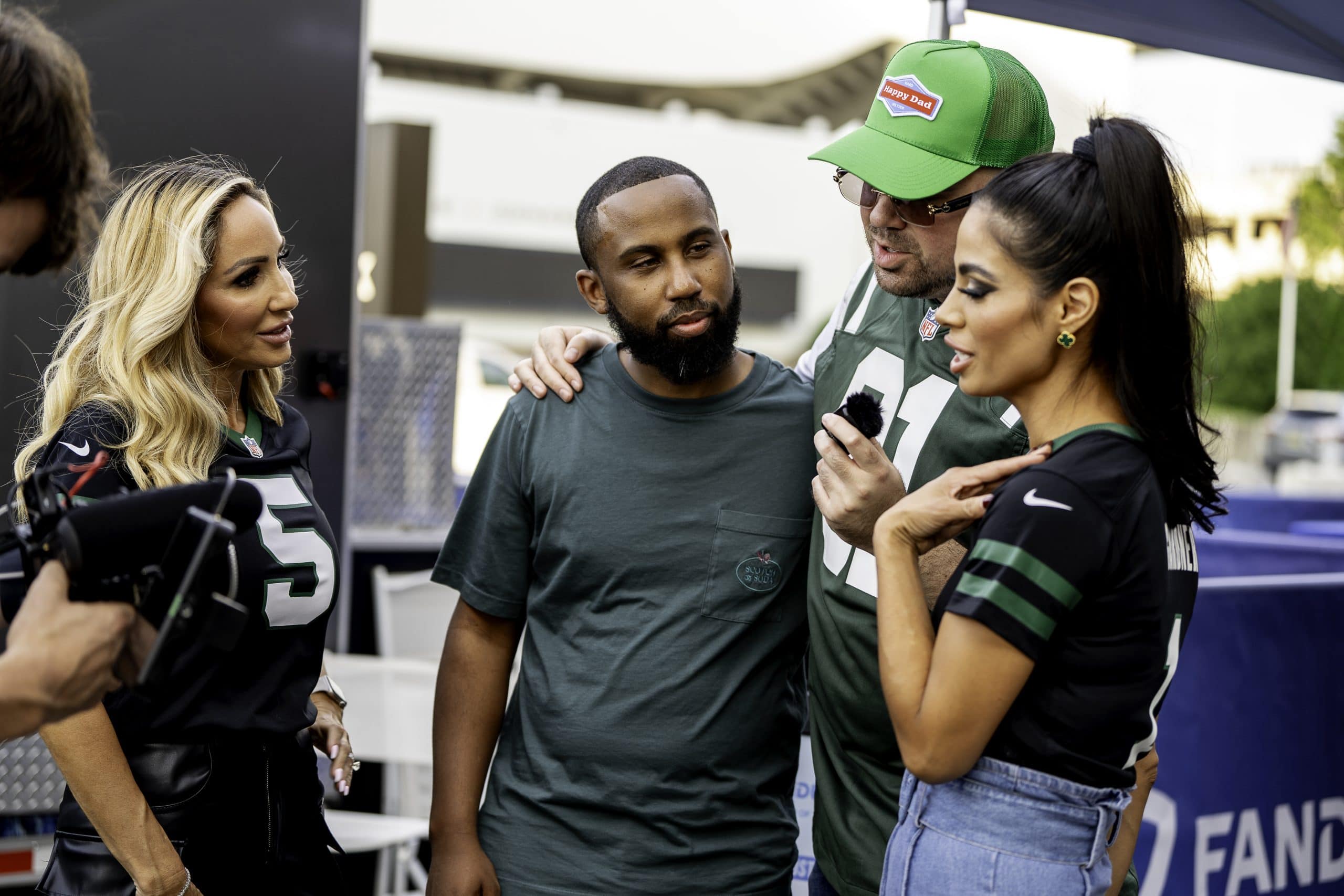
New Jersey’s approach to tailgating alcohol consumption creates a gray area that confuses many Long Island fans traveling to MetLife Stadium. Tailgate parties are a legal grey area – under normal circumstances people aren’t allowed to drink outside in parking lots, sitting in pickup truck beds, with car keys in their pockets. That could technically violate physical control laws. But in the spirit of the season, the authorities will look the other way, provided you observe some rules.
The key word is “provided.” You can’t just assume tolerance extends to every behavior. Even though tailgating is tolerated, police are watching for people who get out of hand. If you’re obnoxious, too loud or aggressive, if you give drinks to minors, or if you wander away from your vehicle with your drink, you could be breaking public intoxication laws.
Open container laws vary widely among states. Some states allow open containers in vehicles as long as you aren’t drinking, and some states even allow passengers to drink while in the car. A container is considered open if the seal is broken or the beverage is in a cup. New Jersey’s rules are stricter than many other states, especially regarding vehicle-related violations.
Stadium-specific policies add another layer of complexity. Open container laws vary a great deal, but many cities make it illegal to have open alcoholic beverages in certain public areas. While it is often legal to tailgate with open containers at certain stadiums on game day, you can’t bring these containers to unaffiliated streets or parking lots. Be aware of the local laws and your surroundings if you plan to drink alcohol!
The financial penalties escalate quickly. If you’re convicted of breaking an open container law, you can face fines and community service. For repeat offenders or more serious violations, the consequences become significantly more severe.
The designated driver rule isn’t just common sense—it’s a legal necessity that protects everyone in your group. Choose a designated driver for after the game. A designated driver, by the way, is not someone who has drunk less than anyone else. It is someone who is alcohol-free.
Planning your alcohol consumption prevents problems before they start. It is recommended not to have more than one standard drink per hour. Some examples of what a standard drink is include a 12 oz regular beer, 8-10 oz hard seltzer, 5 oz glass of table wine, and a 1.5 oz shot of distilled spirits.
The timing of your drinking matters as much as the amount. Stop buying beer after the first game quarter. That will give the alcohol time to leave your system, and stadium beer costs too much anyway. Remember, it’s not necessary to get drunk to have a good time.
Binge drinking transforms a fun tailgate into a dangerous situation. While drinking alcohol is common at a tailgate party, binge drinking to rapidly increase your blood alcohol concentration (BAC) can get you arrested for public intoxication. Drinking games that encourage participants to finish drinks in rapid succession or take shots of liquor can put your BAC at a dangerously high level.
Smart tailgaters build safety into their drinking plan from the start. Have plenty of non-alcoholic drinks available. Not just for kids and non-drinkers, but for those who want to switch from alcohol after a while. Keep the food coming. Eating helps slow the absorption of alcohol. Water should be as accessible as beer throughout your tailgate.
The consequences of poor planning extend far beyond legal trouble. There is no safe amount of alcohol consumption if you’re the one driving afterward. If caught driving drunk, you could face fines, a license suspension, or jail time. Plan to have a designated driver or use a ride-share and stay safe. For Long Island fans, this often means coordinating transportation back home across state lines.
The best tailgates happen when safety becomes second nature, not an afterthought. When you’re grilling, be sure you have a fire extinguisher close by. Don’t leave it packed in your truck, but put it within hand’s reach. Besides, even if you don’t need it, another tailgater might.
Following tailgate safety guidelines protects more than just your group—it protects the entire tailgating community. When everyone follows proper food safety, alcohol rules, and fire prevention measures, MetLife Stadium remains a place where Long Island fans can celebrate safely.
Remember that we handle all these safety considerations as part of our professional tailgating services. We bring the expertise, equipment, and experience that turns game day safety from a concern into a competitive advantage.
Continue learning: