Not sure whether a shuttle bus rental or charter bus makes more sense for your next MetLife Stadium event? The answer depends on your group size, budget, and how much convenience actually matters.
Share:
Summary:
You’ve got tickets to the game. You’ve got a group that’s ready to go. Now you’re trying to figure out the transportation piece without overpaying or ending up scattered across three different parking lots.
The shuttle bus rental versus charter bus question isn’t just about picking the bigger vehicle. It’s about understanding what you actually need, what you’re willing to pay for, and whether the per-person math works out when you factor in everything that matters on game day.
Here’s what actually makes a difference when you’re comparing your options.
The terms get used interchangeably, but shuttle buses and charter buses serve completely different purposes. A shuttle bus is built for short, repeated trips between fixed points. Think airport to hotel, parking lot to stadium entrance, or campus building to campus building.
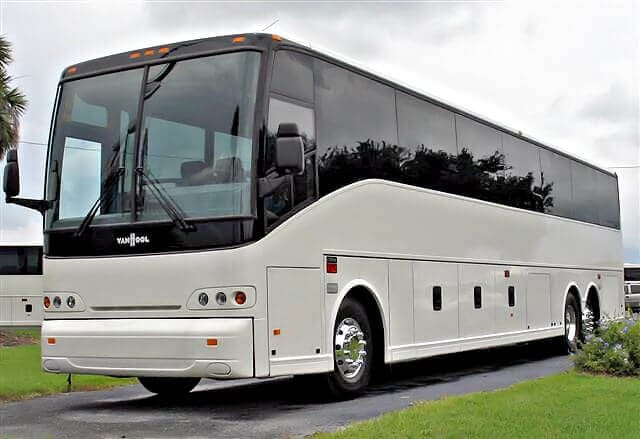
Charter buses are designed for longer trips with custom routes. You’re renting the entire vehicle for your group’s specific itinerary, whether that’s a round trip from Nassau County to MetLife Stadium or a multi-stop tour.
The distinction matters because it affects everything from pricing to amenities to whether the vehicle can actually handle what you’re planning. Knowing which category fits your needs keeps you from paying for features you won’t use or booking something that falls short when it counts.
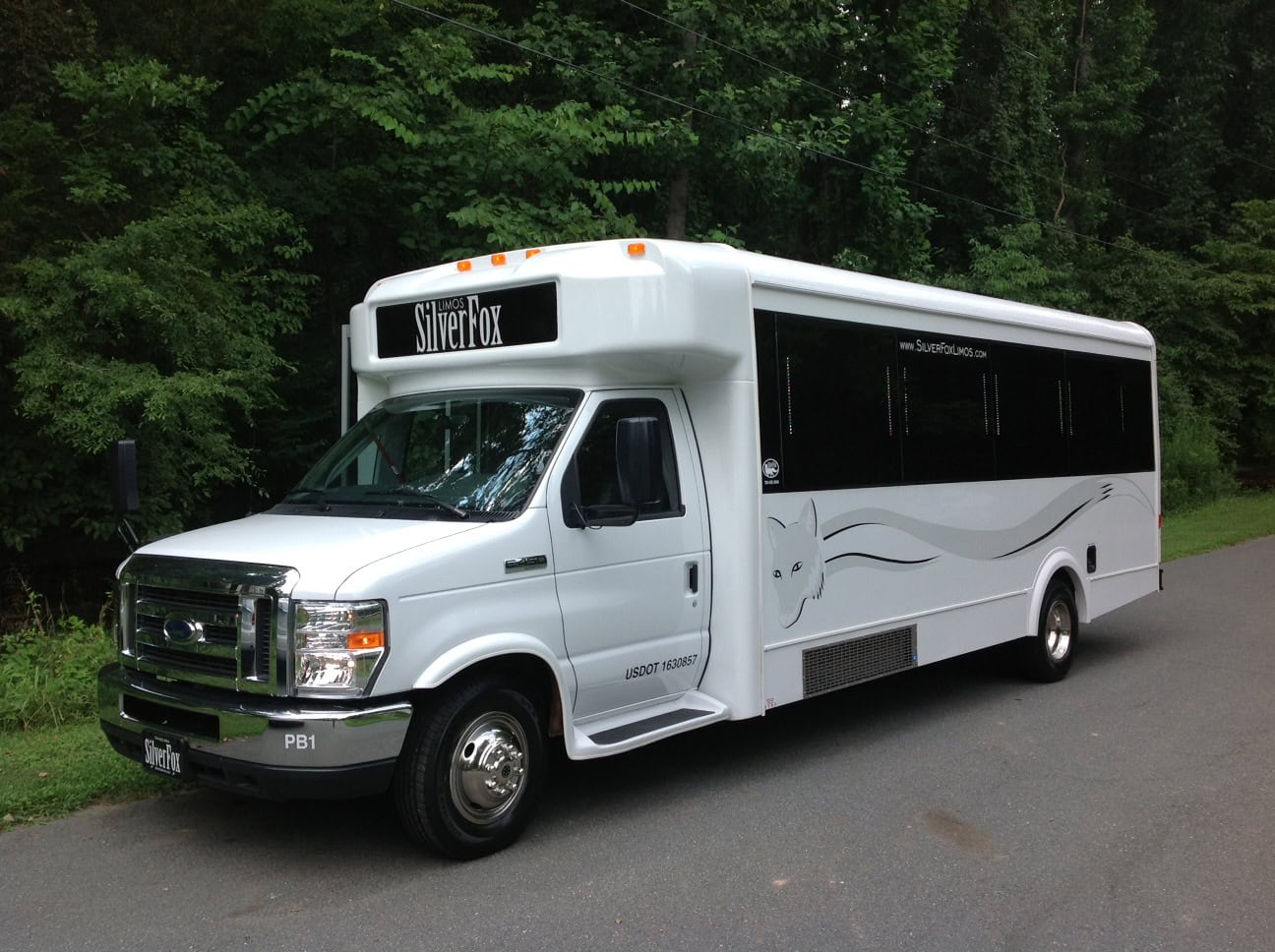
Shuttle buses typically seat between 8 and 30 passengers. They’re compact, easier to maneuver in tight spaces, and designed for efficiency over comfort. If you’re moving a small group a short distance and nobody’s bringing much gear, a shuttle works.
Charter buses seat 40 to 60 passengers comfortably. They’re built for longer trips where people need legroom, storage space, and amenities that make the ride tolerable. The larger capacity also changes the cost equation when you’re splitting the bill.
Here’s where it gets practical. If you’ve got 25 people heading to MetLife Stadium from Long Island, a shuttle might technically fit everyone. But if half the group is bringing coolers, chairs, or tailgating gear, you’ll run out of space fast. A charter bus gives you underfloor storage compartments that keep luggage and equipment out of the aisle.
The capacity question isn’t just about fitting bodies into seats. It’s about whether everyone arrives comfortable, whether your gear makes the trip intact, and whether you’re creating a situation where people are crammed in for an hour each way. For game day transportation where the experience starts the moment people board, that comfort gap matters more than you’d think.
Group size also determines your negotiating power. Charter bus companies charge a fixed rate for the vehicle, so the per-person cost drops significantly as you fill more seats. Forty people splitting a charter bus fare will pay far less individually than 15 people splitting a shuttle bus rental, even though the shuttle’s base price is lower.
Shuttle buses keep amenities basic. You’ll get climate control and upholstered seats, maybe some overhead storage. That’s about it. They’re built for quick transfers, not extended comfort.
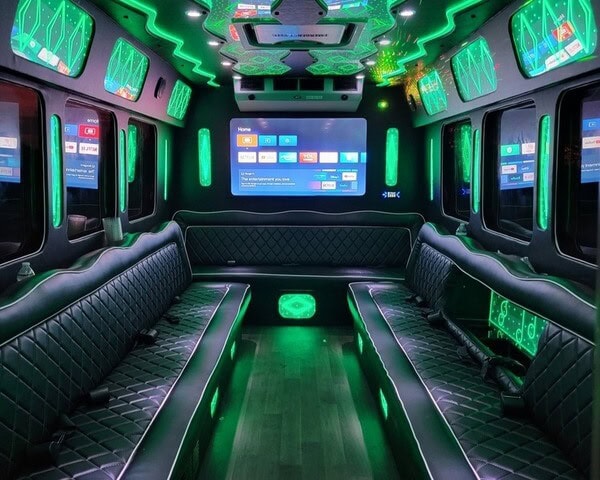
Charter buses come equipped for longer hauls. Reclining seats, onboard restrooms, WiFi, power outlets, entertainment systems, and significantly more legroom are standard on most modern charter coaches. Some include premium features like leather seating or enhanced sound systems.
For a trip to MetLife Stadium from Nassau County or anywhere in the NYC area, you’re looking at 30 to 60 minutes each way depending on traffic. Add in the time spent tailgating, watching the game, and waiting for post-game traffic to clear, and your group could be away from home for 8 to 10 hours.
The amenity gap becomes obvious on the return trip. After three hours of tailgating and four hours in the stands, people want to sit back and decompress. An onboard restroom means you’re not making emergency stops. WiFi and power outlets let people check scores from other games or stay connected. Reclining seats make the ride home less exhausting.
But here’s the trade-off you need to consider. Those amenities cost money. Charter buses command higher hourly or daily rates than shuttle buses precisely because they offer more. If your group genuinely doesn’t care about comfort and you’re only traveling 15 minutes down the road, paying for features nobody will use doesn’t make sense.
The real question is whether the added comfort justifies the added cost for your specific situation. A group of 50 fans heading to a playoff game who want the party to start on the bus will value those amenities differently than a corporate group making a quick shuttle run from a nearby hotel.
Want live answers?
Connect with a Savvy Tailgate expert for fast, friendly support.
When you rent a charter bus with a driver, you’re paying for the vehicle, the driver’s time, fuel, and often additional fees like tolls or parking. Most companies in the New York area require a minimum rental period, typically five hours for local trips.
Pricing varies based on distance, duration, time of year, and day of the week. Expect higher rates during peak seasons like spring and summer, and premium pricing for weekend bookings when demand spikes.
The per-person cost becomes the deciding factor for most groups. A charter bus that costs $1,200 for an eight-hour rental breaks down to $24 per person for a group of 50. That same $1,200 split among 20 people costs $60 each. The math changes dramatically based on how many seats you fill.
The advertised rate for a shuttle bus rental or charter bus rarely tells the complete story. You need to account for gratuity (typically 10-15% of the total), parking fees at the venue, any tolls along the route, and potential overtime charges if your event runs long.
For a group of 40 people traveling from Nassau County to MetLife Stadium, a charter bus might cost $700 for the vehicle plus $100 in parking and tolls, plus a $105 gratuity. That’s $905 total, or about $22.60 per person. Compare that to everyone driving separately and dealing with MetLife’s prepaid parking permits, gas, and the headache of coordinating arrivals.
The cost advantage grows when you factor in what you’re not paying for. No need to rent multiple vehicles. No parking permits to track down. No designated drivers missing out on the tailgate. No post-game traffic where you’re stuck in your car for an hour while 80,000 people try to leave at once.
Charter bus companies often offer better rates when you book well in advance. Reserving your transportation 4 to 8 weeks before game day can reduce costs by 10 to 30 percent compared to last-minute bookings. Peak season pricing during April, May, and June pushes rates higher, while January, February, and July tend to offer the most competitive pricing.
The hidden value comes from consolidation. When you rent a charter bus with a driver, one transaction covers transportation for your entire group. No collecting money from multiple people for separate rideshares. No tracking who paid for parking and who owes what. One price, one vehicle, one driver who handles the logistics.
For groups splitting the cost, the per-person expense often ends up lower than individual transportation alternatives while delivering a significantly better experience. You’re not just saving money. You’re buying convenience, reliability, and the ability to keep everyone together from start to finish.
Standard charter bus rentals get you from point A to point B. Tailgate bus rental services take it further by coordinating the entire pre-game experience, not just the ride.
Some companies offer packages that include luxury coach transportation plus a fully equipped tailgate setup at the stadium. That means professional-grade grills, weather-resistant canopies, sound systems, tables, chairs, and sometimes even catering and entertainment. You’re not just renting a bus. You’re renting a complete game day solution.
The value proposition changes when you compare DIY tailgating to a coordinated service. Organizing your own tailgate means buying or renting equipment, hauling it to the stadium, setting up in a parking lot, managing food safety during transport, and tearing everything down after the game. Then you’re dealing with MetLife Stadium’s parking permit requirements and navigating 23,000 parking spaces spread across 14 different lots.
A tailgate bus rental service handles all of that. The bus picks you up at a convenient location in Nassau County, Queens, or wherever your group is coming from. When you arrive at MetLife Stadium, the tailgate setup is already in place. Premium location secured. Equipment ready. Food being prepared by people who know what they’re doing.
After the game, you walk back to the bus and head home. No cleanup. No packing up gear. No waiting in your car while traffic crawls. The driver navigates the post-game chaos while you relax with your group.
The cost structure differs from a simple shuttle bus rental because you’re paying for the added services. But when you break down what you’d spend on equipment, food, permits, parking, and your own time coordinating everything, the gap narrows. For groups that want the tailgate experience without the tailgate work, the premium makes sense.
This model works especially well for corporate groups, season ticket holders, or fans who attend multiple games per season. Instead of reinventing the logistics every time, you book the same service and show up ready to enjoy yourself. The consistency and reliability become worth the investment.
The shuttle bus rental versus charter bus decision comes down to your group size, trip distance, and what kind of experience you’re trying to create. Shuttles work for small groups making short trips where comfort isn’t a priority. Charter buses make sense for larger groups, longer distances, or situations where amenities and convenience justify the higher cost.
When you run the per-person math and factor in everything you’re not paying for separately, the right choice usually becomes clear. For MetLife Stadium game day transportation, where parking complexity and traffic are guaranteed headaches, professional group transportation eliminates problems before they start.
If you want the full game day experience handled from pickup to drop-off, we coordinate transportation, tailgate setup, food, entertainment, and cleanup for groups heading to MetLife Stadium from Nassau County and across the NYC area.
Article details:
Share:
Continue learning: