NJ winters don't forgive bad planning. Here's what actually goes wrong at DIY cold weather tailgates — and how to avoid all of it.
Share:
Summary:
There’s a version of cold weather tailgating that looks great in your head. You’ve got the tent, the grill, the cooler packed with drinks, and a group of friends ready to go. Then game day arrives, it’s 27°F with wind gusts off the Meadowlands, and everything starts going sideways before kickoff.
When consumer-grade gear meets a New Jersey winter at an open-air stadium, something has to give. Understanding where DIY tailgates break down — and what the alternative looks like — can save your whole day.
Most cold weather tailgating advice online is written for a generic stadium in a generic city. Layer up. Bring a blanket. Pack hot cocoa. That’s fine as far as it goes, but it doesn’t account for what tailgating at MetLife Stadium in East Rutherford actually involves.
MetLife is entirely open-air — no roof, no windbreaks, no shelter built into the structure. January and February average around 25°F, and December is the rainiest month on the calendar, with nearly 5.7 inches of precipitation. The flat, open terrain of the Meadowlands makes wind conditions noticeably more severe than in sheltered urban environments. That’s not just uncomfortable — it’s the kind of cold that shuts a poorly planned tailgate down within the first hour.
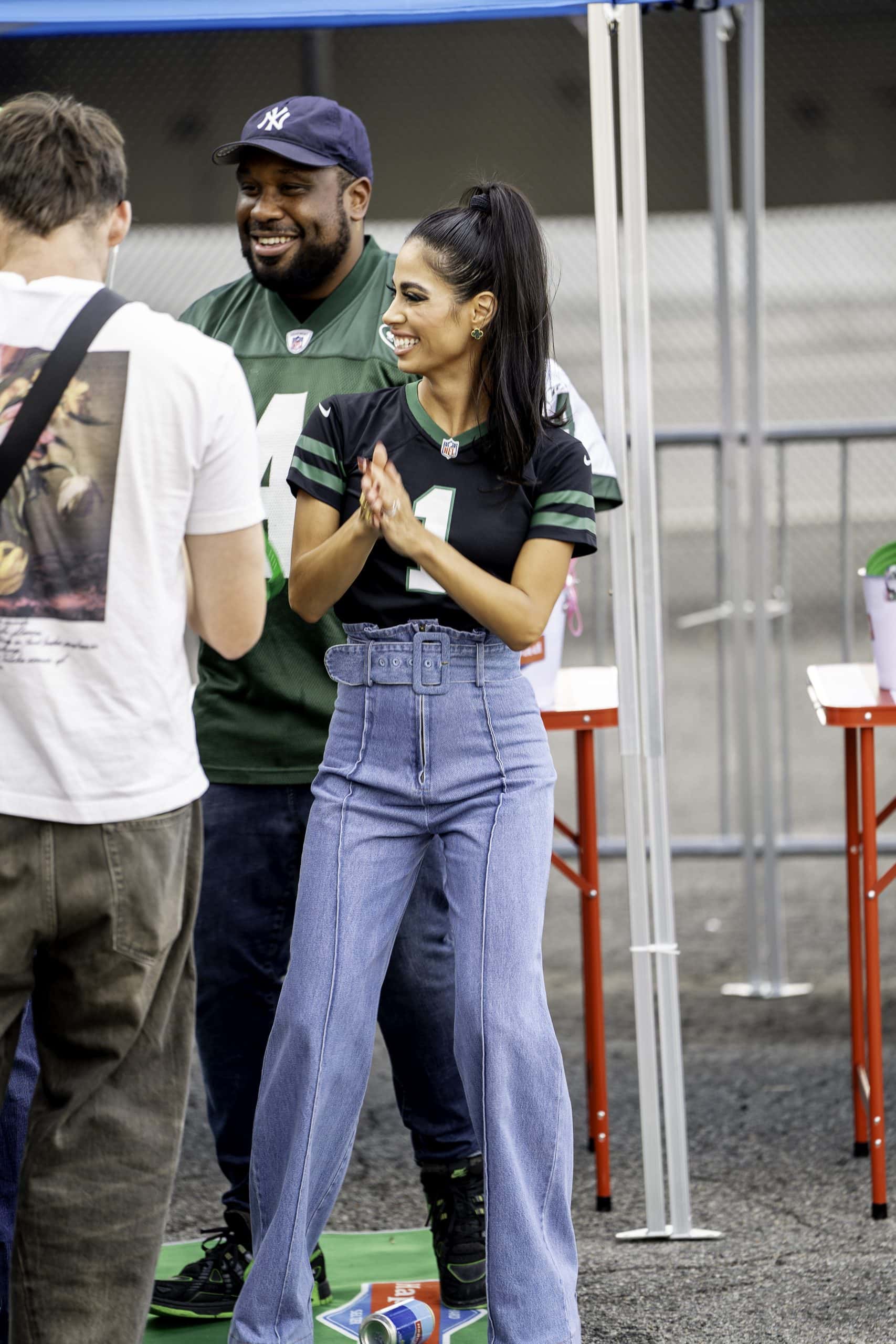
This is where most DIY tailgates fail first. A consumer pop-up canopy from a big-box store is rated for light wind and mild rain. It is not rated for sustained Meadowlands gusts, frozen ground that won’t hold stakes, or the kind of sideways rain that comes with a December game day in East Rutherford. The seams leak, the frame flexes, and if a strong gust hits at the wrong angle, the whole thing goes over.
What actually holds up in those conditions is a commercial-grade frame tent — the kind built with heavy-duty ripstop material, waterproof vinyl tops, and reinforced anchoring systems. These aren’t the same category of product. They’re built for sustained outdoor use in real weather, not for a backyard birthday party.
The other piece most people miss is sidewalls. An open-sided canopy in 25°F weather with wind is essentially no shelter at all. Attachable sidewalls — especially mid-zip styles — block wind-driven rain and trap heat inside the tent. Add a portable propane heater and the temperature difference between inside and outside becomes dramatic. That’s the setup that keeps a tailgate running comfortably through a four-hour pre-game window.
The honest reality is that sourcing, transporting, and setting up commercial-grade tent equipment as a one-time DIY project is expensive and logistically complicated. Renting it requires lead time, a truck, and someone who knows how to anchor it properly in frozen ground. Most fans don’t have any of that figured out before they’re already committed to the game.
We’ve been setting up at MetLife for over 20 years. Our tents go up hours before the lots open, sidewalls are added based on the forecast, and portable heaters are staged for cold-weather games. By the time you arrive, it’s already warm inside. That’s not a luxury — in a New Jersey winter, it’s just what a functional tailgate looks like.
Cold weather creates a food problem that most people don’t think about until it’s already happening. You pull something off the grill, and within five minutes it’s lukewarm. Within ten, it’s cold. Grills also take significantly longer to heat in sub-freezing temperatures, and propane output drops as the tank cools — so your cooking timeline goes out the window.
There’s also a food safety dimension that gets overlooked. Proper food handling requires keeping hot food above 140°F and cold food below 40°F. In a New Jersey winter, cold food stays cold — but hot food drops through the safe zone faster than most people realize, especially when it’s sitting in a chafing dish with no commercial warming equipment underneath it.
Consumer coolers and basic chafing setups aren’t built to maintain safe temperatures across a three-hour tailgate in freezing conditions. Commercial coolers and warmers are. They’re insulated differently, they’re designed for sustained temperature maintenance, and they’re what food service professionals use because the alternative creates real health risks.
We hold certified food service and safe-serve licenses, which means our catering operation isn’t just about making the food taste good — it’s about handling it correctly from prep through service. That matters more at a cold-weather tailgate than most people expect, and it’s one of those things you don’t notice when it’s done right but definitely notice when it isn’t.
The menu side of things matters too. Rainy, cold game days call for food that actually warms you up — hearty, hot options that hold their temperature and give your group something to look forward to. Our all-you-can-eat setup is built around that. Nobody’s standing around waiting for a cold burger.
Want live answers?
Connect with a Savvy Tailgate expert for fast, friendly support.
Rain changes everything about a DIY tailgate. It’s not just the shelter problem — it’s the ground, the gear, the logistics, and the mood. Wet folding chairs, soaked tablecloths, and a grill that won’t stay lit in the rain are all fixable problems individually. Together, they turn what was supposed to be a fun morning into an endurance test.
MetLife’s parking complex spans 28,000-plus spaces across lots A through P. You need a prepaid permit — walking up on game day without one means no parking. And in cold, wet weather, figuring out which of the 14 lots you’re supposed to be in while circling the complex is a miserable experience that eats into your tailgate window before it even starts.
MetLife has specific regulations that catch first-time and occasional tailgaters off guard. Grills are permitted in the surface parking lots but not in the parking decks. Open fires aren’t allowed. A minimum Class 2A-10B:C fire extinguisher is recommended for anyone using a grill. New Jersey state ordinance caps tailgate sound systems at 65 decibels, and the system has to face toward your vehicle — not toward other groups.
None of this is secret information, but it’s also not something most fans research before they show up. Discovering a rule violation after you’ve set everything up — in the rain, in the cold, with a group waiting on you — is a genuinely awful experience.
Because we operate exclusively at MetLife and have done so for over 20 years, our setup is fully permitted and regulation-compliant before the first guest arrives. We know which lots work best for our setup, when to arrive to secure the right position, and how to navigate the complex’s specific logistics without any of the guesswork. That insider knowledge isn’t something you can replicate by reading the stadium FAQ the night before a game.
For fans coming from Manhattan or Long Island, there’s an additional layer of friction: the Lincoln Tunnel to Route 3 West is 20 minutes on a normal day and 45 to 90 minutes on a game day. Our party bus service handles that entirely — climate-controlled coaches with pickup across all five boroughs and Long Island, so the tailgate starts the moment you board, not the moment you find parking in East Rutherford.
This is the question most people don’t do the math on until after they’ve already had a bad experience. The average DIY NFL tailgate runs about $205 per group in direct spending — food, drinks, and supplies — before you factor in the permit ($40 to $60 for parking alone, prepaid), any equipment you need to rent or buy, and the time cost of setup and teardown.
In cold weather, that equation gets worse. A quality weatherproof tent with sidewalls isn’t cheap to rent for a day. A portable heater adds more. If your tent collapses or leaks, you’ve spent money on something that didn’t work. And the cleanup — packing wet, frozen gear into a car in the dark after a three-plus hour game — is something nobody accounts for when they’re planning the fun parts.
Our all-inclusive packages cover permits, commercial-grade tent setup, all-you-can-eat catering, a cash bar, live DJ, photo booth, tailgate games, and full cleanup. Flat-rate pricing means you know exactly what you’re paying before game day — no parking surprises, no permit confusion, no equipment failures. When you actually compare what DIY costs against what we deliver, the gap is smaller than most people expect.
The other thing worth saying plainly: the tailgate is three hours of your day. For a lot of fans, it’s the part they’re most looking forward to. A miserable cold-weather setup doesn’t just ruin the pre-game — it affects how you feel walking into the stadium. A warm, fully running tailgate with good food, music, and a group of people who are actually having fun sets a completely different tone for the day.
We start three hours before kickoff, which means you have the full window — not a shortened version of it because setup took longer than expected or the tent needed emergency repairs.
Yes — but only if your setup can actually handle the conditions. MetLife in December or January isn’t Lambeau Field, but it’s no joke either. An open-air stadium on flat Meadowlands terrain, with New Jersey winter weather and a parking complex that requires advance planning, is a real logistical challenge for anyone trying to run a quality tailgate from scratch.
The fans who have the best cold weather game days aren’t the ones who packed the most gear. They’re the ones who walked into a warm, fully set-up tailgate, ate well, enjoyed the music, and walked into the stadium feeling good — instead of exhausted from three hours of managing a setup that was fighting the weather the whole time.
If you’re planning a Giants or Jets game this season and want the day to actually go the way you’re picturing it, reach out to Savvy Tailgate Zone. We’ll handle everything from permits to cleanup — you just show up ready to enjoy it.
Article details:
Share:
Continue learning: