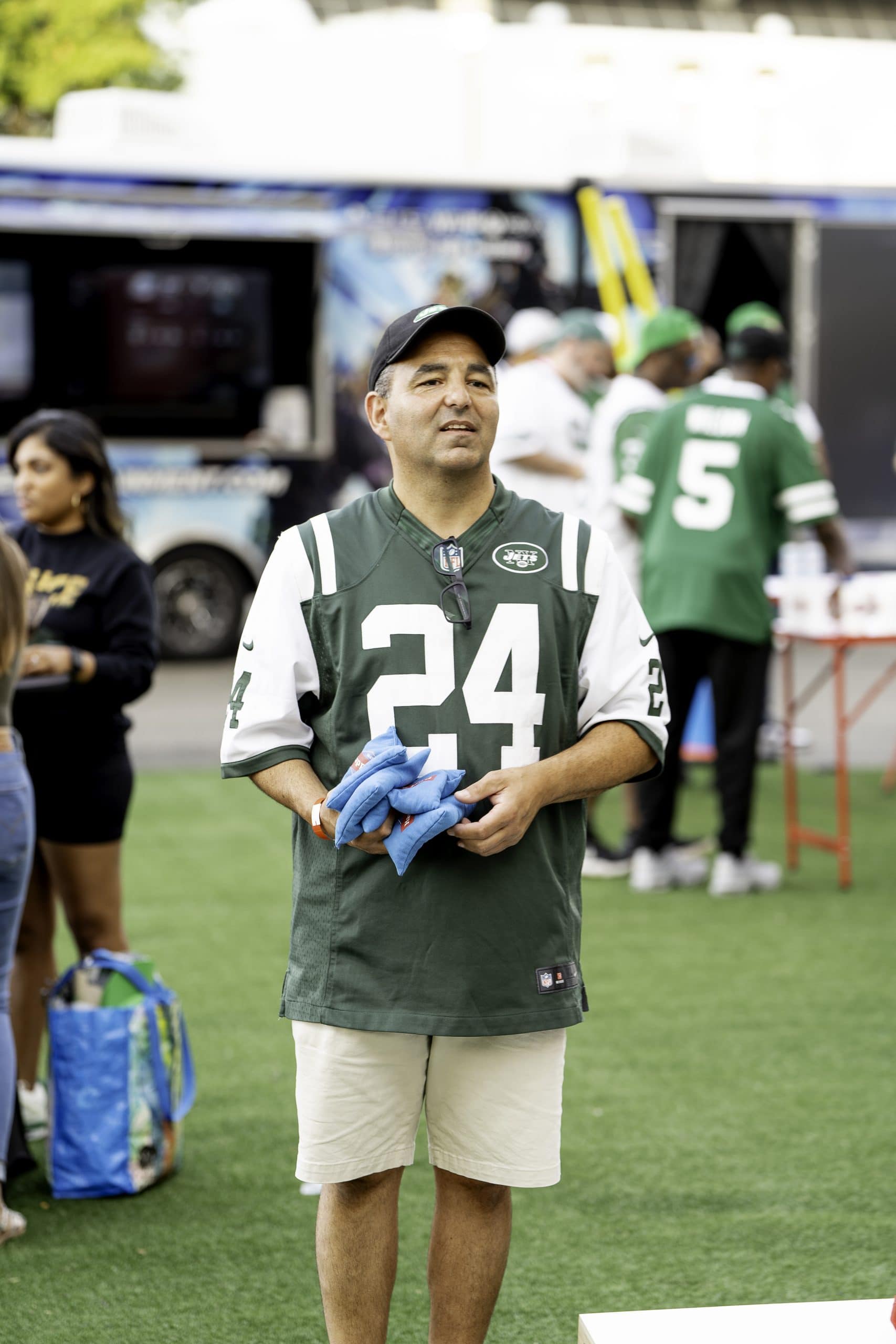
Game day catering and concert event management serve different purposes at MetLife Stadium. One focuses on food service while the other coordinates every logistical detail of your pre-event experience.
Share:

Summary:
You’ve got tickets to the game or concert. You want to make the experience special with a pre-event party. But when you start researching your options in Nassau County, NY, you hit a wall of confusing terms—game day catering, event coordination, tailgate services, concert event planners.
Here’s what you actually need to know: catering and event management aren’t the same thing, and picking the wrong one can leave you scrambling to fill in gaps you didn’t know existed. Game day catering focuses on feeding your group. Event management handles everything else—permits, setup, timing, entertainment, and making sure nothing falls through the cracks. Some companies offer one, some offer both, and knowing the difference helps you avoid paying for services you don’t need or missing services you do. Let’s break down what each one actually does.
Game day catering is food service designed for pre-event gatherings, typically in parking lots or outdoor venues before sporting events. The caterer provides the meal—whether it’s burgers off the grill, buffet-style spreads, or plated options—along with the staff to serve it and the basic equipment needed to keep everything at the right temperature.
Most game day catering packages include menu planning, food preparation, on-site cooking or heating, serving staff, and cleanup of food-related items. You’ll get plates, utensils, napkins, and sometimes basic beverage service. The caterer shows up, sets up their station, feeds your group, and packs up when the meal is done.
What game day catering typically doesn’t include: permits, tables and chairs (unless specifically added), entertainment, decorations, timeline management, or coordination with other vendors. You’re getting the meal handled professionally, but you’re still responsible for the rest of the party logistics.

Restaurant catering and game day catering might sound similar, but they’re built for completely different environments. Restaurant catering usually delivers food to indoor venues with existing infrastructure—kitchens, refrigeration, electrical outlets, and climate control. Game day catering operates in parking lots where none of that exists.
Game day caterers bring commercial-grade grills, portable heating equipment, and heavy-duty coolers because they can’t rely on venue amenities. They’re experienced with outdoor cooking in unpredictable weather, from 95-degree heat to unexpected rain. They understand timing constraints when parking lots open only a few hours before kickoff, and they know how to work within the specific rules of venues like MetLife Stadium.
MetLife Stadium, for example, prohibits certain types of grills in parking decks and requires tailgating to stay within marked spaces. A caterer experienced with game day events already knows these regulations and brings compliant equipment. A regular restaurant caterer might show up with the wrong setup and face problems before they even start cooking.
The food itself also differs. Game day menus lean toward handheld, easy-to-eat options that work well outdoors—think sliders, wings, BBQ, and finger foods. Restaurant catering often features plated meals or dishes that require tables and proper seating. When you’re standing in a parking lot with a drink in one hand, you need food designed for that environment.
Licensed game day caterers in Nassau County, NY also carry the proper insurance and food service certifications for outdoor events. This protects you from liability if something goes wrong. Not all restaurant caterers maintain these specific credentials, which can become a problem if there’s an incident at your event.
Hiring a caterer solves your food problem, but it doesn’t solve everything. You’re still the de facto event coordinator, which means you’re handling permits, equipment rentals, entertainment, timeline management, and vendor communication.
At MetLife Stadium, you need to secure parking permits in advance. Lots open five hours before NFL games and four to five hours before concerts, and you need to know which lot works best for your group size. If you’re bringing your own tent, tables, and chairs, you’re responsible for hauling them, setting them up, and making sure they comply with stadium rules about space usage and fire lane access.
You’ll also need to coordinate timing. When should the caterer arrive? When should your guests show up? How long before kickoff should you start packing up? If you’re also hiring a DJ or renting a sound system, you’re the one making sure everyone shows up at the right time and has what they need.
Weather contingency planning falls on you too. If it starts pouring rain an hour before your event, do you have backup shelter? If it’s 95 degrees, do you have shade and fans? The caterer handles food temperature control, but they’re not responsible for guest comfort beyond that.
Cleanup is another split responsibility. The caterer cleans up food service areas—their grills, serving stations, and disposables. But they’re not breaking down your tent, hauling away your coolers, or making sure the parking space is clear before you leave. That’s on you or whoever you’ve recruited to help.
This DIY coordination works fine for small, casual gatherings where you don’t mind managing details. For larger groups, corporate events, or situations where you want to actually enjoy the party instead of running it, the gaps start to matter.
Want live answers?
Connect with a Savvy Tailgate expert for fast, friendly support.
Concert event management takes a completely different approach. Instead of just handling one piece of the puzzle, an event manager coordinates the entire experience from start to finish. They’re the single point of contact responsible for permits, vendor coordination, timeline execution, and troubleshooting when things don’t go according to plan.
Event managers for concert tailgates work differently than game day coordinators because concerts have different logistics. Parking lots for concerts at MetLife Stadium often open at different times depending on the artist, and load-in schedules can vary. Sound restrictions might be stricter for concerts than for sporting events, and the crowd vibe is different—concert-goers might want different entertainment and food options than football fans.
A concert event planner handles securing your spot, coordinating with the venue, arranging all equipment and vendors, creating and managing the timeline, and executing the plan on the day of the event. You tell them what you want, they make it happen, and you show up to enjoy it.

Concert event planners coordinate every vendor and logistical detail so nothing gets missed. They start by understanding your vision—how many people, what kind of vibe, what your budget looks like—and then they build the plan around that.
Permit acquisition is one of the first tasks. MetLife Stadium requires parking permits, and depending on your setup, you might need additional permissions for certain equipment or activities. The event planner knows what’s required, how to get it, and when deadlines fall. They also understand stadium-specific rules, like where you can and can’t set up, what equipment is allowed, and how to avoid violations that could shut down your event.
Vendor coordination is where event management really shows its value. Instead of you calling the caterer, the tent company, the DJ, and the equipment rental place separately, the event planner handles all of it. They make sure everyone has the same timeline, knows where to set up, and understands their role. If the DJ needs power and the generator company needs to know where to place the unit, the planner coordinates that. You’re not playing telephone between five different vendors.
Timeline management keeps everything on track. Concerts have specific start times, and if parking lots open four hours before the show, your planner schedules setup, guest arrival, food service, and pack-up to maximize your pre-concert experience without rushing. They account for traffic patterns, typical arrival times for concert-goers, and how long each phase of your event should last.
On the day of the event, the planner is on-site managing execution. If the caterer is running late, they handle it. If weather changes and you need to adjust the setup, they make the call. If a guest has a question or problem, they’re the point person. You’re free to greet guests, enjoy the party, and actually participate instead of managing logistics.
Post-event responsibilities include coordinating cleanup and teardown. The planner makes sure all vendors pack up properly, the space is left clean, and any rented equipment is returned. This matters more than you might think—MetLife Stadium has strict policies about cleanup, and leaving a mess can affect your ability to host future events.
When people search for “day of event coordinator cost,” they’re usually trying to understand if professional management fits their budget. Nationally, day-of coordinators average around $600 to $1,130 for basic services. In high-cost areas like Nassau County, NY and the greater New York City metro, expect to pay $1,500 to $3,000 or more depending on event complexity and coordinator experience.
That price range covers different service levels. Basic day-of coordination typically starts four to six weeks before your event. The coordinator reviews your existing plans, creates a detailed timeline, communicates with your vendors to confirm details, and manages execution on the event day. They’re not planning the event from scratch—they’re taking your plan and making sure it actually happens.
More comprehensive coordination packages cost more because they include earlier involvement. A coordinator who starts working with you two to three months out can help with vendor selection, contract review, and design finalization. They’re not just executing your plan; they’re helping you build a better one.
For concert and game day events specifically, coordinator costs vary based on group size, setup complexity, and how much the coordinator needs to manage. A simple setup for 20 people with one caterer and basic equipment costs less than a corporate event for 100 people with multiple food stations, entertainment, branded decorations, and VIP areas.
What you’re paying for is expertise and peace of mind. Experienced coordinators have relationships with vendors, which can mean better pricing or priority service. They know how to prevent common problems—like food running out too early or entertainment starting at the wrong time. They’ve handled weather emergencies, vendor no-shows, and last-minute changes enough times that they can solve problems quickly without panicking.
The value calculation comes down to your priorities. If you enjoy planning and coordinating, and you have the time to manage details, you might not need a coordinator. If you’re hosting a high-stakes corporate event, celebrating a major milestone, or you simply want to be a guest at your own party, the cost makes sense. Spending $2,000 on coordination for a $10,000 event means you’re investing 20% of your budget to ensure the other 80% doesn’t go to waste because of poor execution.
For Nassau County, NY events at MetLife Stadium, factor in the venue’s specific requirements. Coordinators familiar with MetLife Stadium know the parking lot layout, understand which lots work best for different event types, and have relationships with stadium staff. That local expertise can be worth the investment, especially for first-time hosts who don’t know the venue.
Game day catering works when you want professional food service but you’re comfortable managing everything else. Concert event management makes sense when you want someone else handling the full scope of logistics, vendors, and execution. Some situations call for both—a full-service event management company that includes catering as part of a comprehensive package.
The decision comes down to your event size, complexity, and how much of your own time and energy you want to invest. Small, casual gatherings with friends might only need catering. Corporate events, large groups, or milestone celebrations often benefit from full event management. And if you’re hosting at a venue like MetLife Stadium with specific rules and logistics, working with a provider who knows that venue inside and out can save you from costly mistakes.
If you’re planning a tailgate or pre-concert party in Nassau County, NY, we offer full-service solutions that handle everything from permits and setup to catering, entertainment, and cleanup. With over 20 years of MetLife Stadium experience, we know exactly what it takes to create a stress-free, memorable event.
Article details:
Share:
Continue learning: