From prepaid permits to party buses, here's everything you need to know before you try to park at MetLife Stadium.
Share:

Summary:
Most people don’t think twice about parking until they’re already committed to driving. Then they start Googling, and that’s when the confusion sets in — permits, lot tiers, shuttle buses, sold-out passes, and a post-game traffic situation that can turn a great night into a two-hour crawl back to the highway.
MetLife Stadium is massive. It seats 82,500 people, sits in East Rutherford, NJ, and draws fans from every corner of New York City and Long Island. Getting there is only half the challenge. Here’s a clear breakdown of every parking option available — and one alternative that skips the whole thing.
A lot of fans still call it Giants Stadium out of habit — the original stadium stood on the same site from 1976 until 2010, and the name stuck. But MetLife Stadium is the current venue in East Rutherford, and it operates under its own parking system that’s worth understanding before you show up.
The MetLife Sports Complex has roughly 28,000 parking spaces spread across 14 lots. They’re divided into two main tiers: Gold lots and Platinum lots. Gold lots — including B, D, J, K, L, M, and P — are the outer ring. They’re more affordable, but you’re walking farther. Platinum lots — E, F, G, and S — sit closer to the stadium gates and carry a higher price tag. For NFL games, passes typically range from $30 on the low end to $160 or more depending on demand and how close you want to be.
Yes — and this is the detail that catches first-timers off guard more than anything else. For NFL games, MetLife Stadium requires prepaid parking permits. You can’t drive up, pay at the gate, and pull into a lot. The permits are sold through Ticketmaster, and they need to be secured before you arrive. If you show up without one, you’ll be redirected to the off-site lot at 20 Murray Hill Parkway in East Rutherford — a flat $55 with a shuttle to the stadium. It works, but it adds time and distance to your trip.
Mobile passes aren’t available for download until the week of the game, and printed permits will not be replaced if lost or stolen. That’s a firm policy. So if you’re planning to drive, get your permit early, keep it safe, and print it before you leave home.
One more thing worth knowing: the NJ State Police have authority to conduct vehicle searches — including canine units — at MetLife Sports Complex entry points. Vehicles that refuse a search are denied entry. It’s not something most fans think about, but it’s part of the reality of arriving at one of the largest stadiums in the country.
For concerts and other non-NFL events, the parking rules can differ. Some events use the same lot system, others have modified procedures. It’s always worth checking the event-specific parking page on MetLife’s official site before you go, rather than assuming the NFL rules apply to every show.
When fans refer to “the Meadowlands,” they’re usually talking about the broader Meadowlands Sports Complex in East Rutherford — the same area that once housed the Meadowlands Racetrack and still sits adjacent to American Dream, the 3-million-square-foot retail and entertainment complex directly next to MetLife Stadium.
American Dream has become an increasingly popular parking workaround. Fans park at the mall and walk across a pedestrian bridge to the stadium. It’s free, but it adds significant walking time and can be a long haul after a full game — especially in January, in the cold, after a loss.
NJ Transit is the other main alternative. The Meadowlands Rail Line runs on event days from Secaucus Junction, which connects to major transit hubs across New Jersey and New York City. The Frank R. Lautenberg Station in Secaucus offers a dedicated park-and-ride with about 1,100 spaces, and round-trip rail fare from Penn Station runs roughly $11. Getting there is usually smooth. Getting home is a different story — post-game trains are notoriously packed, and the wait can be significant.
Rideshare is an option, but surge pricing after a major MetLife event can be steep. After 82,500 people pour out of a stadium at the same time, the supply-demand math works against you. Expect to wait, and expect to pay more than you planned.
One more important note: if you’re attending any FIFA World Cup 2026 match at MetLife — including the Final — there will be no general parking available at the stadium. Every attendee must use NJ Transit, official shuttle buses, or rideshare. That’s confirmed. If you have World Cup tickets and were counting on driving, now’s the time to make a different plan.
Want live answers?
Connect with a Savvy Tailgate expert for fast, friendly support.
Here’s the honest version of the parking conversation: even when everything goes right — you got your permit, found your lot, arrived early — you’re still sitting in traffic for an hour or more after the game. That’s just the reality of 28,000 cars trying to exit the same complex at the same time via Routes 3, 17, and the NJ Turnpike.
For fans coming from Brooklyn, Queens, Manhattan, the Bronx, or Long Island, there’s a different option worth knowing about. One that doesn’t involve permits, lot tiers, or post-game gridlock at all.
We’ve been running tailgate and transportation packages at MetLife Stadium for over 20 years, and the party bus option is the one that makes the most sense for a significant portion of the fan base — specifically, the fans who live in New York City or Long Island, don’t want to drive, and want to actually enjoy the day without managing logistics.
Here’s how it works. We pick you up from a designated location in your borough or on Long Island — we cover all five NYC boroughs and Long Island — and take you directly to the MetLife Stadium tailgating area on a luxury coach. The ride is part of the experience. No one’s watching the clock, no one’s stressed about parking, and no one’s stuck being the designated driver.
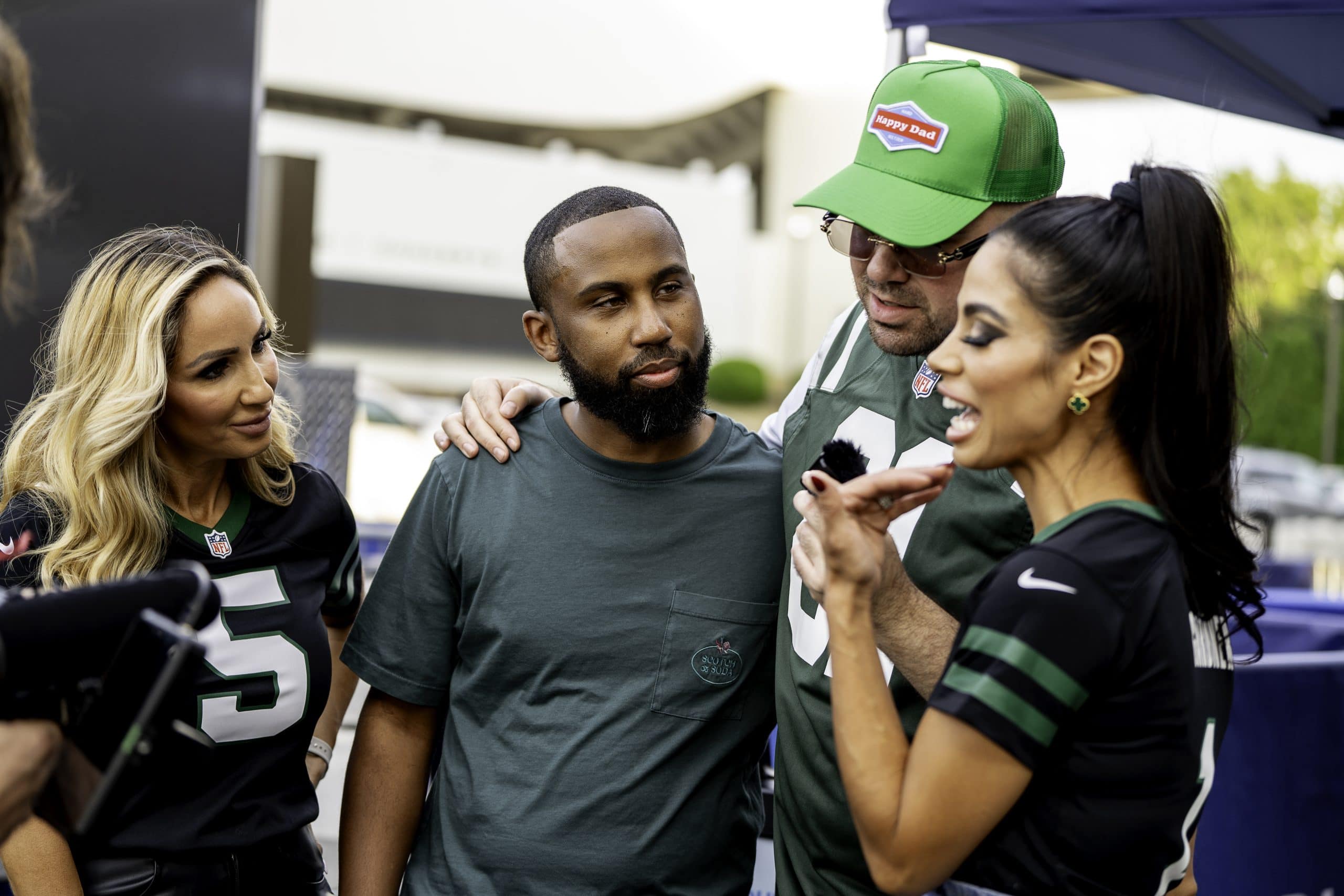
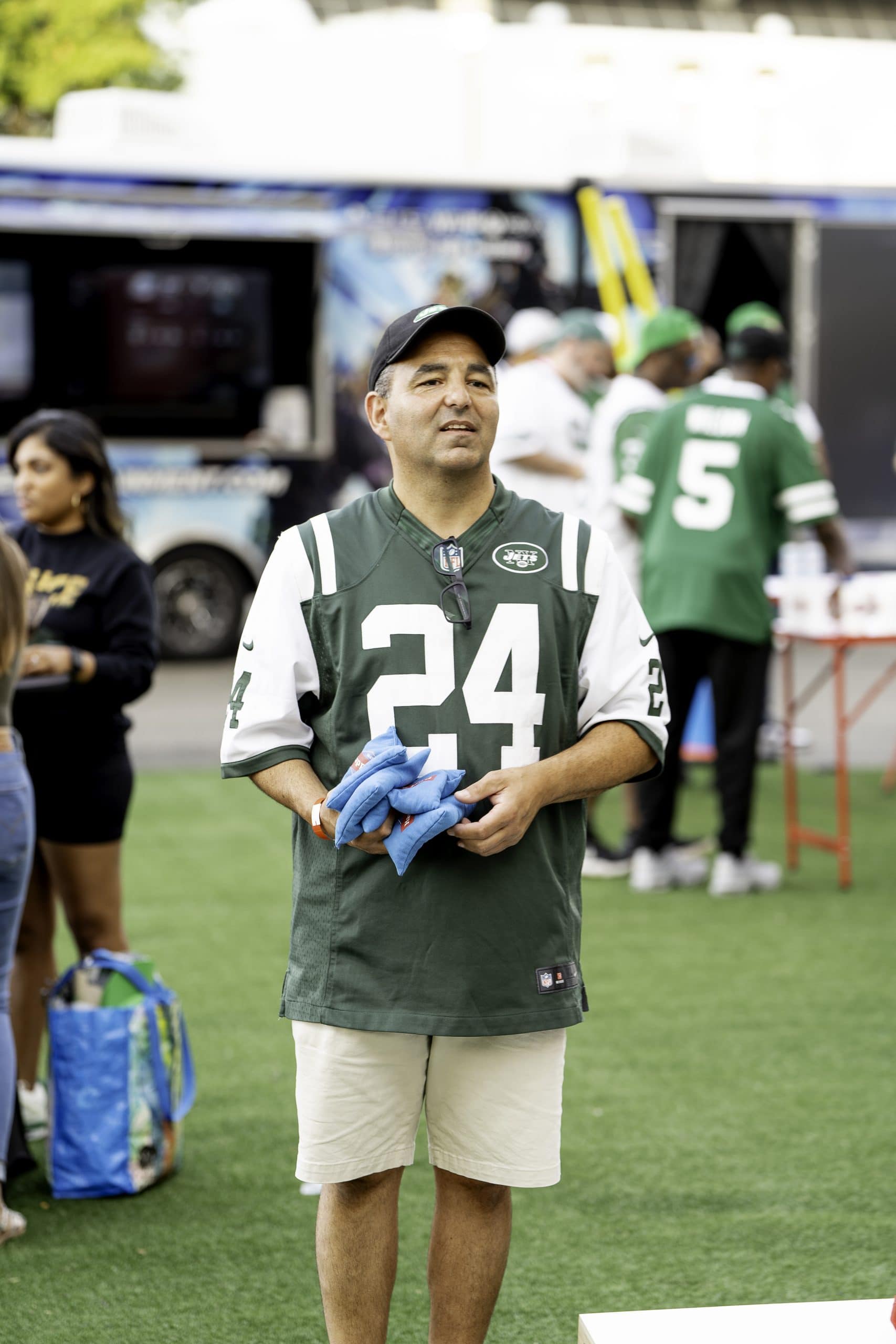
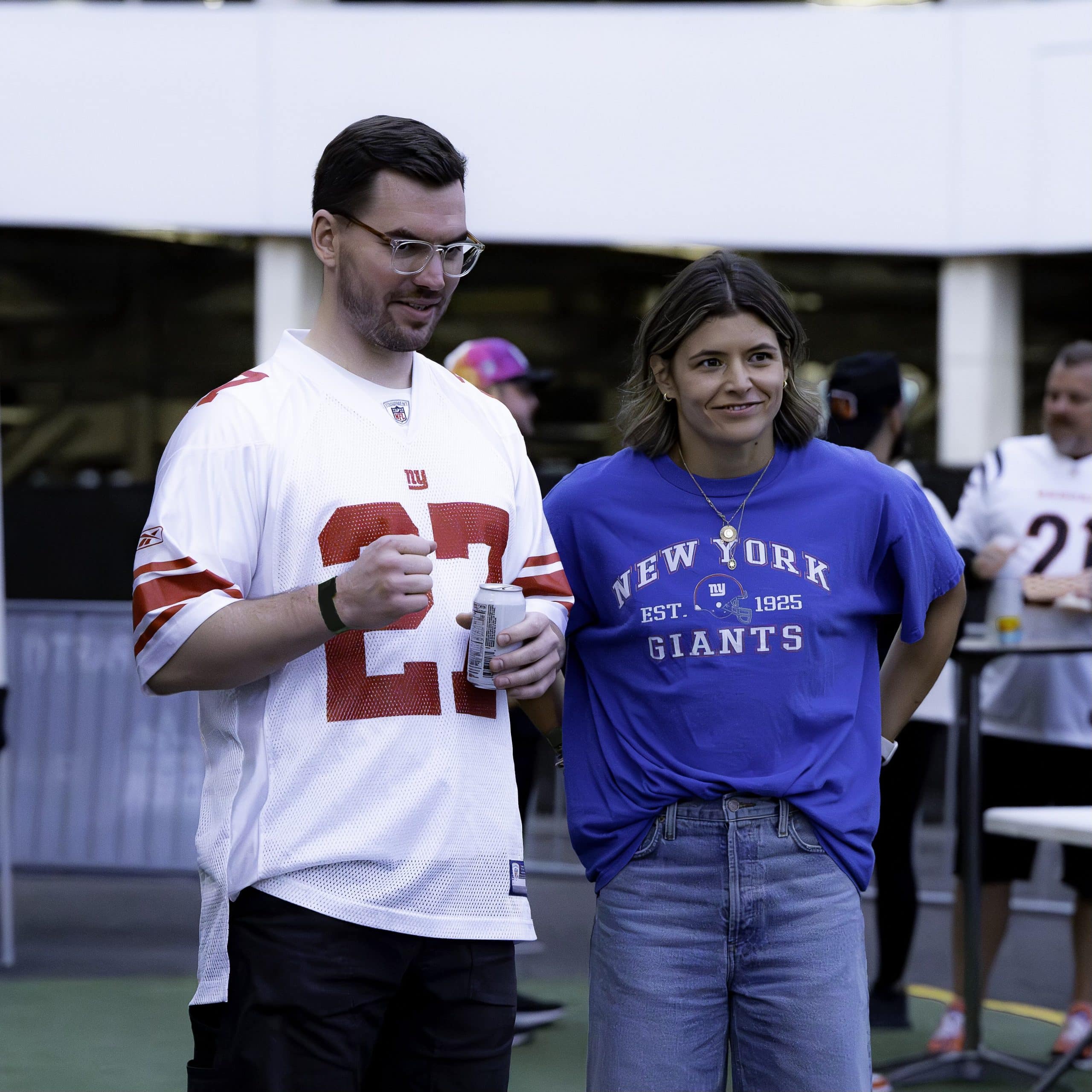
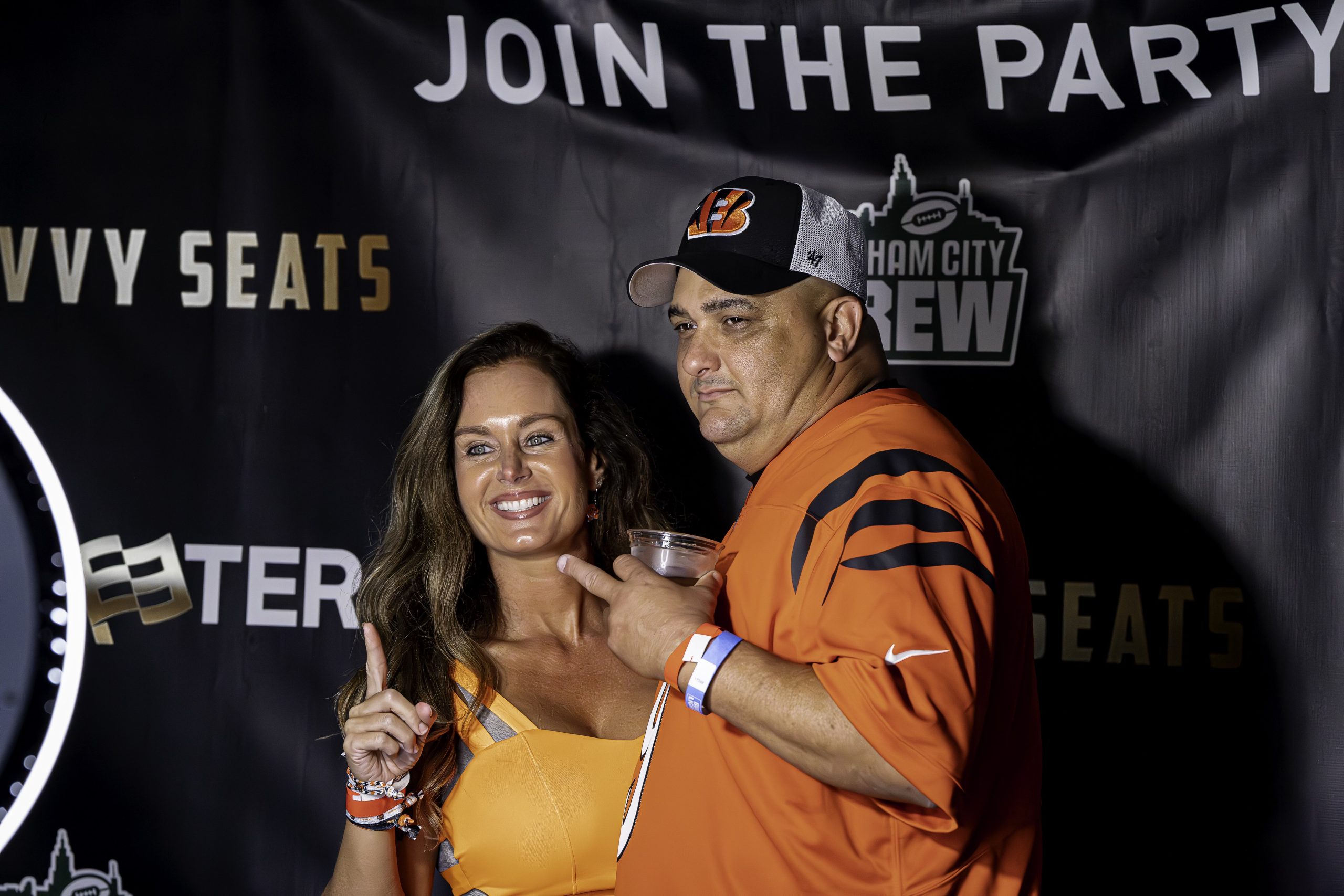
When you arrive, the tailgate is already set up and running. We’re on-site three hours before kickoff with commercial-grade frame tents, tables, chairs, grills, and warmers. The food is all-you-can-eat. There’s a cash bar. There’s a live DJ. There are tailgate games, a photo booth, and giveaways. Our crew handles setup, manages the space throughout the event, and breaks everything down after. You walk in, enjoy it, and leave.
After the game, the bus is waiting at the designated pickup area. You’re not hunting for your car in a dark parking lot or waiting 45 minutes for a rideshare that’s charging three times the normal rate. You get on the bus and head home.
We hold proper food service certifications, safe-serve licenses, and a liquor license. Our drivers are licensed and insured commercial operators — not someone’s cousin with a rented van. These aren’t details we mention to check a box. They matter because this industry has operators who cut corners, and the reviews show it.
If you’re planning to tailgate on your own in one of the MetLife lots, there are rules you need to know — and they’re enforced.
The one-car, one-space rule is exactly what it sounds like. Your tailgate is limited to your parking space and the area directly in front of or behind your vehicle. You cannot claim the space next to you, even if it’s empty. Stadium tailgate patrol actively enforces this, and it’s not a soft guideline. If you’re thinking about spreading out with a large tent and extra coolers across two spaces, that’s not going to work.
Canopies and tents are limited to an 8′ x 8′ footprint in standard lots. That’s a meaningful restriction if you’re planning a real setup for a group of six or more. It also means the kind of commercial-grade weatherproof canopies we use — with attachable sidewalls and optional portable heaters for cold-weather games — aren’t something you can replicate in a standard lot. MetLife is an open-air stadium with no roof, in New Jersey, running games from September through January. Weather is not a hypothetical concern.
Lots open five hours before kickoff and close two hours after the game ends. That’s your window. And if you’re tailgating in one of the Platinum lots closer to the gates — E, F, G, or S — you’re paying a premium for proximity but operating under the same space restrictions as everyone else.
The bottom line for DIY tailgaters: it’s absolutely doable, but it requires planning, the right equipment, and a realistic understanding of what the space allows. For groups of four or more, when you add up the cost of a permit, food, drinks, equipment rental, and the post-game logistics, the math on a full-service tailgate package often gets closer than people expect.
There’s no single right answer here — it depends on where you’re coming from, how many people are in your group, and how much of the day you want to spend managing logistics versus actually enjoying yourself.
If you’re driving from New Jersey and you know the routine, grab your permit early, pick your lot based on your gate, and budget time for post-game traffic. If you’re coming from New York City or Long Island and you’d rather not deal with any of it, our bus and tailgate package is worth a serious look — especially for groups, corporate outings, or anyone attending a World Cup match where parking won’t exist at all.
We’ve been handling the MetLife Stadium experience for over 20 years, and the thing we hear most from first-timers is that they wish they’d known sooner. If you want to skip the permit confusion and the post-game crawl and just show up to a party that’s already running, reach out to Savvy Tailgate Zone and we’ll walk you through what works for your group.
Article details:
Share:
Continue learning: